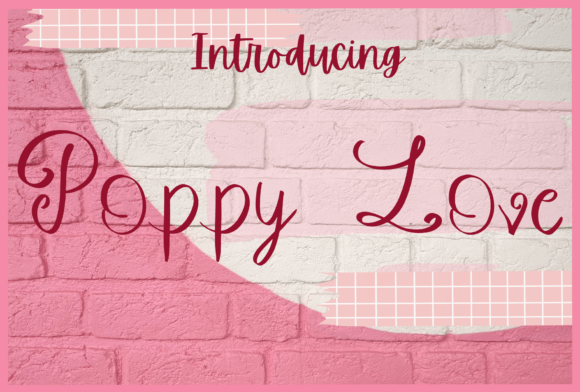
Poppy Love: A Handwritten Font for Your Brand
If you run a small business, you know how much effort goes into making every customer interaction feel personal. From the logo on your website to the tag on your product, each detail shapes how people see you. One of the easiest ways to bring warmth and personality into your brand is through the typeface you choose. That is where Poppy Love comes in. This handwritten font from Script Amp belongs to the Fonts collection, and it offers something many business owners look for: charm, approachability, and a handmade feel that stands out in a world of generic templates.
What Makes Poppy Love Different from Other Fonts
Poppy Love is a handwritten font with delicate strokes and playful letterforms. It does not try to look rigid or corporate. Instead, it feels like something you might write by hand on a gift tag or a thank-you note. The letters have a natural rhythm, with slight variations that keep the text from feeling mechanical. That human touch is exactly what helps small businesses connect with customers on an emotional level.
When I first tested Poppy Love for my own brand, I noticed how it softened the overall look of my materials. A simple product label suddenly felt more inviting. A social media graphic became warmer. That shift may seem small, but it matters when you are trying to build trust with people who have never bought from you before. A script font like this can communicate kindness and care without saying a word.
Where Poppy Love Fits in Your Brand Toolkit
One of the questions I hear most from other business owners is where to use a decorative font versus a simpler one. The answer depends on the job you need the typeface to do. Poppy Love works beautifully as a display font for headlines, logos, and accent text. It is not designed for long paragraphs or body copy, and that is fine. Its strength lies in making short pieces of text memorable.
Here are some practical ways to use Poppy Love across your business materials:
- Logo design – A handwritten logo feels personal and approachable. Poppy Love can serve as the main lettering in your logo, especially if your brand leans feminine, whimsical, or handmade.
- Product labels – Whether you sell candles, skincare, food, or crafts, a handwritten font on your label signals that your product was made with care. Poppy Love works well for ingredient lists or product names when paired with a clean sans serif font.
- Packaging design – Use it for short phrases like "handmade with love" or "thank you" on boxes, bags, or wrapping paper. It adds a personal touch without overwhelming the design.
- Thank-you cards and stickers – These small touches build customer loyalty. A handwritten font makes your thank-you note feel like it was written just for them.
- Menus – Cafes and bakeries can use Poppy Love for category headers or featured items. It helps the menu feel warm and inviting.
- Flyers and posters – For event announcements or sales, Poppy Love can draw attention to the headline while a simpler font handles the details.
- Website banners – Use it sparingly on your homepage or landing pages to highlight key messages.
- Instagram posts and Pinterest graphics – Handwritten fonts perform well on social media because they look authentic. Whether you are sharing a quote, a product shot, or a behind-the-scenes image, Poppy Love can help your text stand out.
How the Right Font Builds Trust with Your Customers
Consistency is one of the most underrated tools in branding. When you use the same typeface across your logo, labels, website, and social media, customers start to recognize your brand instantly. That recognition builds trust. Poppy Love can become part of that consistent visual identity if you use it thoughtfully.
For example, imagine a bakery that uses Poppy Love on its storefront sign, its cake tags, its Instagram posts, and its packaging. A customer who sees the font on social media will recognize it when they visit the shop. That small connection makes the brand feel cohesive and professional. It tells customers that you pay attention to details.
That same principle applies to online sellers. If your Etsy shop banner uses a different font than your product labels, your brand can feel scattered. By choosing a signature typeface like Poppy Love and sticking with it, you create a unified look that makes your shop easier to remember.
Real Examples of Poppy Love in Action
Let me walk through a few realistic scenarios where Poppy Love can elevate a small business brand.
A Handmade Candle Label
If you sell soy candles with names like "Lavender Dream" or "Vanilla Comfort," a handwritten font on the label adds to the handmade appeal. Pair Poppy Love for the candle name with a clean sans serif font for scent notes and ingredients. The contrast keeps the label readable while preserving the personal feel.
A Beauty Product Line
For small-batch skincare or bath products, Poppy Love works well on product names or short phrases like "gentle on skin." The delicate strokes match the care that goes into making the product. Just make sure the font size is large enough to read on small jars or tubes.
A Coaching Business
If you offer coaching or wellness services, you might use Poppy Love on your website header for your name or a tagline like "find your balance." It softens the visual tone and makes you seem more approachable. Pair it with a simple serif font for body text to maintain readability.
A Café or Bakery
Cafés often use chalkboard-style or handwritten fonts on their menus and signs. Poppy Love can serve that purpose beautifully. Use it for featured drinks or daily specials on a menu board or a digital display. It brings a cozy, local feel that customers love.
A Boutique or Online Shop
For clothing or accessories boutiques, a handwritten logo can feel trendy without being overly casual. Poppy Love can appear on the shop's website header, hang tags, and shopping bags. It gives the brand a consistent look across physical and digital touchpoints.
Readability Considerations for Real Business Use
One concern I hear from business owners is whether a handwritten font will be readable on small screens or tiny labels. That is a valid question. Poppy Love, like most script fonts, works best when you give it enough space. Avoid using it for long sentences or at very small sizes. On mobile screens, test how it looks as a headline or logo mark. If the text becomes hard to read, consider using it only for accent purposes and letting a simpler font handle the rest.
For printed packaging, always print a test label before ordering a large batch. What looks clear on your computer screen may look different on a textured paper or a curved surface. The same goes for social media graphics. Check how your text appears in thumbnail view because that is often where customers first see it.
Testing Poppy Love Before Committing
Before you use Poppy Love across your entire brand, try it on a few pieces first. Create a mockup of your logo, a product label, and a social media graphic. See how it feels in each context. You may discover that the font works beautifully for some applications but needs to be paired with a secondary typeface for others.
I recommend starting with one or two uses, then expanding as you grow comfortable. That way, you avoid a full rebrand if the font does not feel right in every situation. Testing also helps you decide how prominently you want the font to feature in your brand identity.
Simple Font Pairing Ideas for Poppy Love
No font works entirely on its own. The best brand identities use a combination of typefaces to create contrast and hierarchy. Poppy Love pairs well with clean sans serif fonts like Lato, Open Sans, or Montserrat. The contrast between the organic handwritten strokes and the clean geometric lines creates a balanced look.
If you prefer a more classic feel, consider pairing Poppy Love with a readable serif font such as Playfair Display or Georgia. The serif font can handle body text while Poppy Love takes care of headlines and accents. This combination works especially well for luxury or artisanal brands.
Avoid pairing Poppy Love with another script or handwritten font. That can look messy and confusing. Stick to one decorative font and one neutral font for best results.
Checking Commercial Font Licensing
One practical step that many business owners overlook is font licensing. Before you use Poppy Love on products, packaging, merchandise, client projects, or digital downloads, check the commercial licensing terms from Script Amp. Not all fonts allow commercial use without an extended license. If you plan to sell products that display the font or use it in client work, make sure you have the appropriate license. This step protects your business and ensures you are using the font legally.
The same applies if you create templates, printables, or digital designs for sale. Always read the license agreement carefully so you know what is allowed. It is a small step that prevents big headaches later.
Making Poppy Love Part of Your Brand Identity
Ultimately, a font is just one piece of your brand puzzle. But it is a piece that touches almost every customer-facing material you create. Poppy Love offers a way to inject warmth and personality into your designs without sacrificing professionalism. Whether you run a bakery, a boutique, a coaching practice, or an online shop, this handwritten font can help you communicate care and authenticity.
Start small. Use it in one place, see how it feels, and build from there. With thoughtful placement and the right pairings, Poppy Love can become a recognizable part of your visual identity that customers remember and trust.